Charles Darwin's Strange Obsessions: The Genius Who Ate His Specimens and Serenaded Worms
Charles Darwin's Strange Obsessions: The Genius Who Ate His Specimens and Serenaded Worms
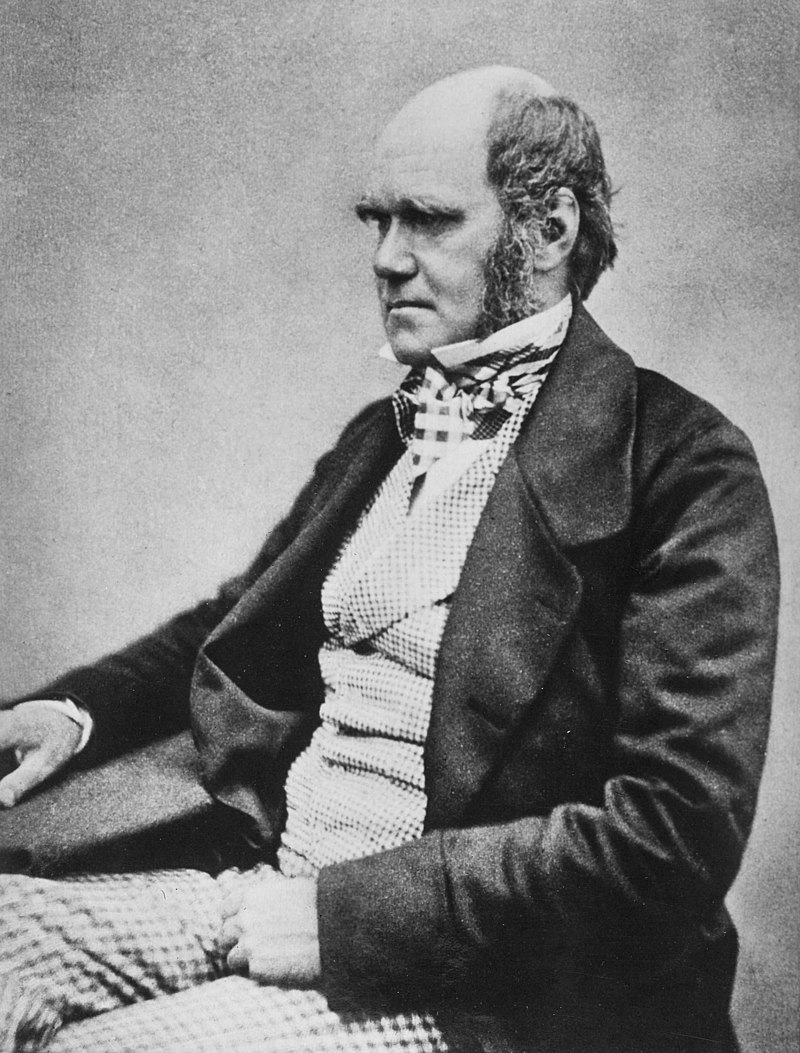
🌍 The Man Who Explained Life Itself
In 1859, Charles Darwin published a book that permanently altered humanity's understanding of itself. On the Origin of Species introduced the theory of natural selection — a concept so powerful, so elegantly simple, that it still forms the unshakeable backbone of modern biology. Darwin spent 20 years quietly assembling his evidence before daring to share it with the world, knowing it would shatter centuries of received wisdom about creation.
Behind that monumental intellectual patience, however, lived a deeply peculiar man. Darwin's private life was a carnival of strange obsessions, rigid rituals, and behaviors so eccentric that even his family treated them with bemused wonder. He ate exotic animals out of scientific curiosity. He walked the same gravel path in the same direction the same number of times every single day. He was chronically, convincingly ill with ailments that no doctor could ever fully diagnose. And in the final years of his life, his most passionate research subject was the humble earthworm — to which he played the piano and bassoon in controlled experiments.
This is the other Darwin: not the serene Victorian sage of portraits, but the obsessive, rule-bound, stomach-clutching, worm-serenading genius behind the theory.
🪨 The Sand Walk: A Ritual Carved in Stone
At Down House, his country estate in Kent where Darwin lived and worked for 40 years, he had a gravel path built around a small grove of trees. He called it his "thinking path," but to anyone watching from a distance it must have looked more like a compulsion. Every single day, without exception, Darwin walked this oval track — and he did not simply stroll around it freely.
Darwin's Counting System
- At the start of each walk, Darwin placed a pile of flint stones at the beginning of the path
- He kicked one stone off the pile with his cane at the end of each completed lap
- He walked exactly five laps per session, three sessions per day
- If interrupted mid-lap — by a visitor, a child, anything — he restarted the entire session from the beginning
- On days of illness, he would instruct family members to carry him part of the route so the ritual could be completed
His children grew up treating the Sand Walk as sacred ground. They knew not to call out to their father mid-circuit. Visitors who arrived unexpectedly and interrupted a session were politely but firmly asked to wait — outside the path's perimeter — until the count was finished. Darwin solved some of science's most complex problems on this track, and he solved them in increments of five laps.

🍽️ The Glutton Club: Eating Science
Darwin's peculiar relationship with food began at Cambridge, where as a student he co-founded an informal dining society whose explicit purpose was to eat animals not normally consumed by the English. They called it the Glutton Club, and its members worked through a rotating menu of owls, hawks, a bittern, and various other birds and mammals considered too strange or too wild for polite Victorian tables.
This habit followed Darwin onto the Beagle and continued throughout his life. During his famous five-year voyage, he ate pumas (which he described as tasting like veal), armadillos, giant tortoises, and iguanas. He was always careful to document the taste and texture of each specimen before or after formal scientific description — to Darwin, tasting the animal was a legitimate extension of studying it.
Items Darwin Ate in the Name of Science
- Puma — "remarkably like veal in taste and tenderness"
- Armadillo — consumed at multiple stops in South America
- Giant Galápagos tortoise — he later regretted not preserving more specimens, as he had eaten several
- Iguana — described as white and tasteless
- Hawk, owl, and bittern — as a Cambridge student; the owl was reportedly revolting
- Brown owl — the Glutton Club's only documented failure; it was declared "indescribably bad"
The most remarkable aspect of Darwin's culinary adventurism was not its breadth — it was its seriousness. He was not showing off or entertaining guests. He was genuinely convinced that understanding an organism sometimes required consuming it, and he pursued this logic with the same dogged methodical patience he applied to everything else.
🤒 The Hypochondriac Who Never Got Better
From his early thirties until his death at 73, Darwin was chronically, elaborately ill. He suffered from relentless nausea, violent vomiting, heart palpitations, trembling, debilitating fatigue, skin rashes, and what he called "swimming of the head." He was often unable to work for more than two or three hours a day. He spent a significant portion of his adult life lying on a sofa in his study.
The peculiarity is that no physician — not the dozens he consulted over 40 years, nor the many specialists who have analyzed his case posthumously — has ever convincingly identified what was actually wrong with him. The leading candidates have included Chagas disease (contracted in South America), arsenic poisoning from medical treatments of the era, lactose intolerance, panic disorder, and psychosomatic illness brought on by the profound anxiety of holding a theory he knew would devastate Victorian religious society.
Darwin's Daily Medical Routine
Every morning, Darwin submitted to a "water cure" — a Victorian spa treatment involving cold wraps, cold showers, and vigorous rubbing with rough towels. He took his temperature obsessively. He maintained meticulous daily health diaries, recording every symptom with scientific precision. He consulted doctors by letter when too ill to travel — which was often. He tried at least a dozen different treatments over his lifetime, none of which cured him, several of which almost certainly made him worse.
Paradoxically, his illness may have been one of the great enabling conditions of his career. Because he could not socialize, attend meetings, or travel, he stayed at Down House and worked. The Origin, The Descent of Man, and his ten other major works were written by a man who spent most of his waking hours convinced he was dying.
🪱 The Worm Concerts
Darwin's last major published work, released in 1881 — one year before his death — was titled The Formation of Vegetable Mould Through the Action of Worms, with Observations on Their Habits. It sold faster in its first year than On the Origin of Species had. This is perhaps the most Darwinian fact about Darwin: his obsessions were so thorough, and his methods so meticulous, that even a book about earthworms became a bestseller.
He spent over 40 years studying earthworms before writing that book. And his methodology was exactly as eccentric as you might expect.
Darwin's Worm Experiments
- He placed worms on a piano and played notes to determine which frequencies they could detect — they responded to vibration, not sound
- He played the bassoon directly over their containers to test different pitches
- His son Francis held a pot of worms over the piano while Darwin played specific keys, recording the worms' movements
- He shone lights at different wavelengths onto worms to test their sensitivity to color
- He placed stones in his garden and measured, over years, how deeply the worms buried them — to demonstrate that worms were responsible for the slow burial of ancient ruins
- He fed worms fragments of different foods to determine their preferences, finding they preferred raw carrot over cooked
What makes this not merely eccentric but genuinely remarkable is that Darwin's conclusions were correct. Earthworms do sense vibration rather than airborne sound. They do play a crucial role in soil formation and the archaeological burial record. Darwin spent four decades serenading worms with Victorian woodwind instruments and emerged with accurate, publishable science. That is a very specific kind of genius.

🏡 The Hermit of Down House
Darwin's retreat to Down House in 1842 was, in part, deliberate. He had come to find London's social demands — the dinners, the visits, the meetings — physically unbearable. Every excursion made him ill. Every social obligation cost him days of recovery. So he engineered a life where almost no one came to him and he went almost nowhere.
For the last 40 years of his life, Darwin rarely left Kent. He turned down honorary degrees, scientific prizes, and invitations from heads of state because travel and ceremony made him vomit. He maintained his vast scientific correspondence — thousands of letters to naturalists, farmers, pigeon breeders, and botanists around the world — entirely from his study sofa, building what was effectively a global research network by post.
His daily schedule was structured with the precision of a military operation: rise at 7, take a short walk, eat breakfast alone, work for 90 minutes, receive the post, work another 90 minutes, eat lunch, rest, walk the Sand Walk (five laps, three times), work for one more hour, then an evening of reading and backgammon with Emma — a game he tracked with elaborate written scores. Any deviation from this schedule produced genuine distress, not mild irritation but the kind of unsettled anxiety that preceded his worst physical episodes.
🧠 The Pattern Behind the Peculiarities
Modern scholars examining Darwin's behavior have proposed various frameworks: obsessive-compulsive tendencies, autism spectrum traits, and the complex interaction between genuine chronic illness and anxiety-driven hypochondria. What emerges from all of these analyses is not a neat diagnosis but something more interesting — a picture of a mind that could only function at its extraordinary level by constructing a very precise, very controlled world around itself.
The Sand Walk counting, the meticulous health diaries, the worm experiment logs, the obsessive correspondence — these were not separate quirks. They were the same impulse expressing itself in different domains. Darwin could not tolerate the unpredictable, so he eliminated it wherever possible and documented whatever he couldn't eliminate. This same impulse that drove him to count pebbles with his cane also drove him to spend 20 years gathering evidence before publishing — because he could not release a theory he had not made airtight.
💫 The Price and the Prize
Darwin's eccentricities cost him in visible, measurable ways. He missed his children's early years, confined to his sofa. He was absent from the great Victorian scientific debates his work ignited — his friend Thomas Huxley fought his battles in public, earning the nickname "Darwin's Bulldog." He attended almost no public events in the last decades of his life. He died having met very few of the scientists whose work directly built on his own.
And yet: the theory stands. The worm book stands. The 14,000-plus letters stand. The obsessive, ritualized, vomit-prone recluse of Down House produced one of the most transformative bodies of scientific work in human history — by building the exact life his peculiar mind required to function, and then working relentlessly within it.
✨ What Can We Learn?
Darwin's story complicates the romantic notion of the freewheeling, spontaneous genius. His productivity was inseparable from his rigidity. His discoveries emerged from obsessive documentation, not flashes of inspiration. He did not have On the Origin of Species in a dream — he assembled it pebble by pebble, the way he counted his laps.
What is most striking is how intentionally Darwin accommodated his own strange mind. He did not try to overcome his need for ritual, his social anxiety, or his hypochondria. He built a house, a path, a schedule, and a method of working that made room for all of it. He designed his life around his limitations and then exceeded every expectation within those constraints.
The next time you walk the same route twice, keep a meticulous journal, or feel more productive inside strict routine than outside it — you may be in good company. The man who explained how all life on Earth changes over time spent 40 years walking the same 90-metre gravel oval. Perhaps consistency and discovery are not opposites after all.


评论
发表评论